top of page


Proving You Are the Rightful Heir in New York: A Deep Dive into Kinship Proceedings
When an individual passes away in New York without a Will (intestate) and their immediate family members are unknown or deceased, the court initiates a rigorous legal process to identify the rightful heirs. This is known as a Kinship Proceeding. If you are a distant relative or live abroad, understanding this process is vital to protecting your Estate Planning interests and securing your inheritance. 1. What is a Kinship Proceeding? A Kinship Proceeding is a formal litigation
Legal Assistant
May 125 min read


The Four Traps of Leaving Assets to Minors in New York
Many parents and grandparents believe that naming a child directly on a Will or a life insurance policy is the purest expression of love. However, the rigid rules of the New York Surrogate’s Court can turn this "direct gift" into a decade-long legal nightmare for your family. If you plan to leave assets exceeding $10,000 to a child under 18, you must be aware of these four legal traps. Trap 1: Parents Do Not Automatically Own "Property Control" The Legal Reality: As a biologi
Legal Assistant
May 114 min read


If My Trustee Passes Away, Is My Trust Void?
1. Always Check the Trust Document First Example: Mr. Smith of Melville, Long Island, explicitly stated in his trust: "If I cannot serve, my attorney shall take over; if he is unavailable, my daughter shall be the Successor." This "waiting list" kept the transition seamless. 2. Private Appointment (No Court Required) A. Trustee Resignation Example: A doctor in Manhattan decided to retire to Florida. He signed a formal Resignation, legally cutting his ties to the trust's futur
Legal Assistant
Apr 283 min read


The Green Card "Trap": Why Mr. Sun’s $1 Million U.S. Estate Became Frozen Assets After His Passing
For many international professionals, obtaining a U.S. Green Card is seen as the ultimate goal for global asset allocation. However, reality tells a different story. If you fail to structure your assets before losing U.S. residency status—or if you overlook the technical details of maintaining "Domicile" for estate tax purposes—that Green Card can quickly transform into a legal nightmare involving multi-year delays and a 35% tax hit. 1. The Unexpected "Freeze" Mr. Sun was a l
Legal Assistant
Apr 234 min read


Are Children Liable for Their Parents' Debts in the U.S.?
Understanding Creditor Claims under NY EPTL In the U.S., specifically under New York law, "filial responsibility" for a parent's private debt is a myth. Debt follows the Estate, not the Heirs. 1. The Priority of Claims (NY EPTL § 13-1.3) An estate must satisfy its obligations in a strict statutory order before any distribution to beneficiaries. Creditors have a legal right to be paid from the estate’s assets, but they cannot pursue the personal assets of the descendants unles
Legal Assistant
Apr 222 min read


Will vs. No Will: What’s the Real Difference?
Why Legal Agency is the True Purpose of Estate Planning 📜 The Power of Agency: Architect vs. Statistic The most fundamental question in estate planning isn't about the size of your bank account; it's about agency . When the time comes to distribute the fruits of your life’s work, do you want to be the architect of that transition, or do you want to remain a mere statistic in the eyes of the law? ❌ The Legal Default: Intestacy The law abhors a vacuum. If you pass away without
Legal Assistant
Apr 163 min read


Key Roles in a New York Will: Who Manages Your Legacy?
When drafting a Will in New York, the focus is often on the distribution of assets. However, the legal effectiveness of a Will relies heavily on the appointment of authority . Under the New York Estates, Powers and Trusts Law (EPTL), choosing the right individuals for key roles is essential for a seamless probate process. 1. The Executor The Executor is the primary fiduciary responsible for settling the estate. In New York, the Executor must be formally appointed by the Surro
Legal Assistant
Apr 23 min read
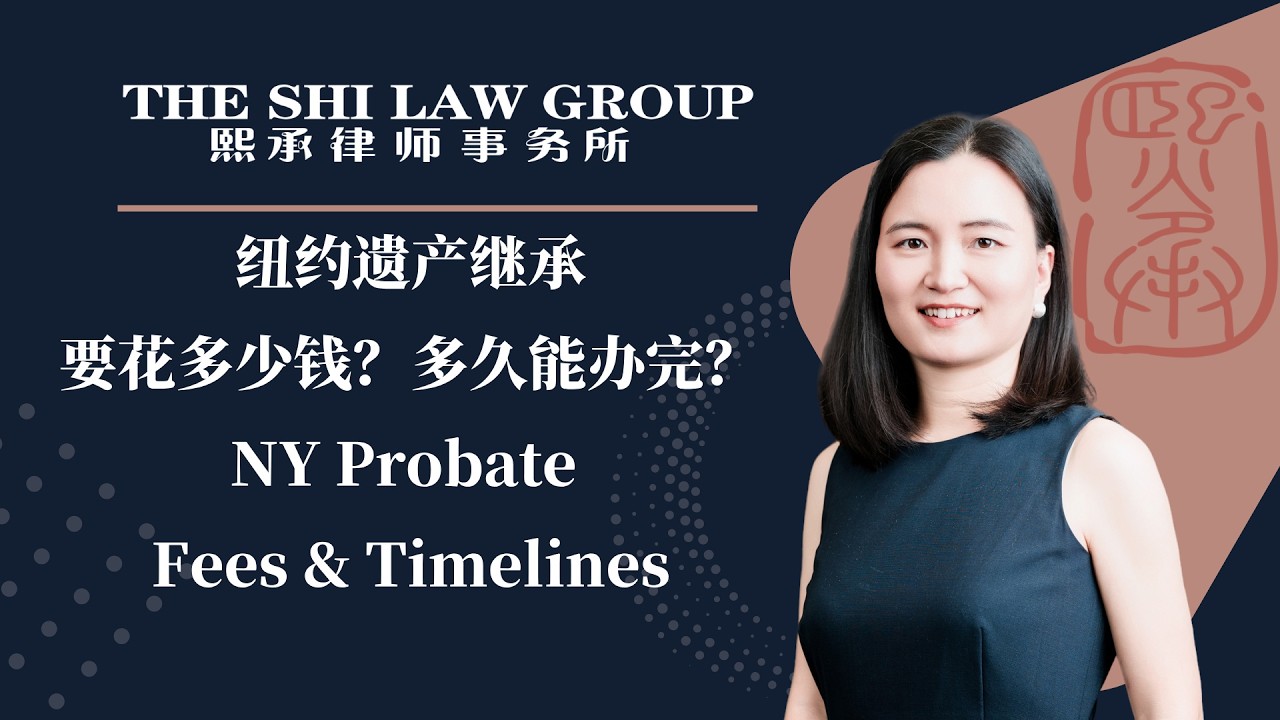
Navigating New York Surrogate’s Court: Fees, Timelines, and Expectations
What determines how fast you can settle a loved one's estate in NY? 📜 The Cost: Uniform Court Filing Fees One of the first questions clients ask is, "How much does the court charge?" In New York State, filing fees for probate or administration proceedings are standardized across all counties. Based on Estate Value: The fee is calculated based on the gross value of the estate assets. The Cap: For larger estates, the maximum court filing fee is generally capped around $1,250
Legal Assistant
Mar 273 min read


Legacy in the U.S.: Wealth or Burden? Understanding the 3 Major Hurdles of Estate Administration in NY & NJ
Will Your Estate Truly Reach the Next Generation? Amidst the hustle of building a life in the U.S., many assume that hard-earned assets will automatically pass to their children. However, under the legal frameworks of New York (NY) and New Jersey (NJ) , wealth transfer is anything but "automatic." Without a strategic plan, your estate could shrink by over 30% or become entangled in years of litigation before your heirs receive a single penny. To achieve a secure transition o
Legal Assistant
Mar 233 min read


Wills 101: Can I Change It? What If I Lose It? (NY & NJ Guide)
Will FAQ: Changes, Erasures, and Missing Documents A Will is a living document—it should reflect your current life. However, how you handle, store, and edit that document in NY or NJ can determine whether the court accepts it or throws it out. 1. Can I Change My Will? Yes. You can update your Will as long as you have the mental capacity to do so. Codicils: For minor changes (like swapping an Executor), you can use a "Codicil." This is a legal supplement that must be signed
Legal Assistant
Mar 163 min read


Will vs. Trust: Which is the Best Shield for Your Assets in NY & NJ?
Will vs. Trust: Navigating Your Options in NY & NJ Many clients ask, "If I have a Will, why do I need a Trust?" The answer lies in how the legal systems of New York and New Jersey handle your passing. While a Will is a set of instructions for a judge, a Trust is a private mechanism that bypasses the courtroom entirely. 1. At a Glance: Key Differences Probate: A Will must be probated in court (Surrogate's Court). A Trust avoids probate , allowing for private distribution.
Legal Assistant
Mar 43 min read


Last Will & Testament: The Essential Safety Net for NY & NJ Families
Your Final Word: Why a Will is Non-Negotiable in NY & NJ Clients often ask, "If I'm getting a Living Trust, why do I still need a Will?" The truth is, in New York and New Jersey, a Will is not just a backup—it is a legal necessity . While a Trust manages your assets, a Will handles the human and administrative elements that a Trust simply cannot. 1. Naming Guardians: A Power Only a Will Holds This is the most critical function of a Will for parents. In NY and NJ, a Trust can
Legal Assistant
Mar 33 min read
给您的家庭和财富加一份保障!
熙承律师事务所全天候为纽约和新泽西的家庭和财富保驾护航,无论何时何地,请点击右方按钮预约免费咨询。
bottom of page