top of page


The Green Card "Trap": Why Mr. Sun’s $1 Million U.S. Estate Became Frozen Assets After His Passing
For many international professionals, obtaining a U.S. Green Card is seen as the ultimate goal for global asset allocation. However, reality tells a different story. If you fail to structure your assets before losing U.S. residency status—or if you overlook the technical details of maintaining "Domicile" for estate tax purposes—that Green Card can quickly transform into a legal nightmare involving multi-year delays and a 35% tax hit. 1. The Unexpected "Freeze" Mr. Sun was a l
Legal Assistant
Apr 234 min read


Are Children Liable for Their Parents' Debts in the U.S.?
Understanding Creditor Claims under NY EPTL In the U.S., specifically under New York law, "filial responsibility" for a parent's private debt is a myth. Debt follows the Estate, not the Heirs. 1. The Priority of Claims (NY EPTL § 13-1.3) An estate must satisfy its obligations in a strict statutory order before any distribution to beneficiaries. Creditors have a legal right to be paid from the estate’s assets, but they cannot pursue the personal assets of the descendants unles
Legal Assistant
Apr 222 min read


The Hidden Hurdles of Cross-Border Inheritance: A Guide for H-1B/L-1 Holders
1. Legal Barriers (SCPA §707) Under New York law, a Non-domiciliary Alien (neither a U.S. citizen/permanent resident nor a NY resident) is legally ineligible to serve as an executor. This is an absolute statutory bar—posting a bond cannot fix it. Without a qualified local representative, the court appoints a Public Administrator, leading to high fees and loss of family control. 2. Why Cross-Border Legal Expertise is Essential The complexity of international identity verificat
Legal Assistant
Apr 172 min read


Will vs. No Will: What’s the Real Difference?
Why Legal Agency is the True Purpose of Estate Planning 📜 The Power of Agency: Architect vs. Statistic The most fundamental question in estate planning isn't about the size of your bank account; it's about agency . When the time comes to distribute the fruits of your life’s work, do you want to be the architect of that transition, or do you want to remain a mere statistic in the eyes of the law? ❌ The Legal Default: Intestacy The law abhors a vacuum. If you pass away without
Legal Assistant
Apr 163 min read


News Alert: Gov. Hochul Backs NYC Luxury Tax on $5M+ Second Homes
Governor Kathy Hochul has signaled her support for a "Pied-à-Terre" tax , targeting non-primary residences in New York City valued at $5 million or more . Key Highlights: The Target: High-value secondary homes owned by individuals who reside primarily outside of New York State. The Goal: To generate revenue for city infrastructure (like the MTA) from ultra-wealthy owners who utilize city resources but do not pay local income tax. The Industry Reaction: Real estate experts
Legal Assistant
Apr 153 min read


Marriage and Your Will: Protecting Your Children’s Inheritance in NY
In New York, a Will drafted while single is not an absolute shield once you remarry. The law provides a "Spousal Elective Share" that guarantees a surviving spouse a portion of your estate, regardless of your Will’s instructions. 1. The 1/3 Rule Under the NY EPTL, a surviving spouse is entitled to one-third (1/3) of the net estate. Even if you leave "100% to my daughter," your spouse can legally claim their statutory share. 2. Case Study: Ms. Wang’s "Forgotten" Will Ms. Wang
Legal Assistant
Apr 142 min read


Key Roles in a New York Will: Who Manages Your Legacy?
When drafting a Will in New York, the focus is often on the distribution of assets. However, the legal effectiveness of a Will relies heavily on the appointment of authority . Under the New York Estates, Powers and Trusts Law (EPTL), choosing the right individuals for key roles is essential for a seamless probate process. 1. The Executor The Executor is the primary fiduciary responsible for settling the estate. In New York, the Executor must be formally appointed by the Surro
Legal Assistant
Apr 23 min read

Why Your Inheritance Isn't Guaranteed After Infidelity
Navigating New York Inheritance Laws When a Second Family is Involved 📜 Reality Check: Marriage Does Not Equal Full Asset Protection Discovering that a spouse has a second family and non-marital children is a profound betrayal. For many who have been married for decades, divorce may not feel like the optimal path. However, choosing to stay married creates a unique set of legal vulnerabilities that every spouse must understand. ❌ The Myth: "Everything is Joint Property" In a
Legal Assistant
Mar 313 min read


Is New York’s Middle Class Facing an Estate Tax Storm? Understanding the $750k Proposal
Recent headlines have sent a shockwave through New York’s financial and legal circles. A new budget proposal submitted by the NYC Mayor’s office suggests a drastic shift in the state's estate tax landscape: slashing the current $7.35 million exemption down to a mere $750,000 . If passed, this would give New York the lowest estate tax threshold in the United States. For most families in the NYC and Long Island areas, estate taxes would shift from being a "wealthy person’s pro
Legal Assistant
Mar 304 min read
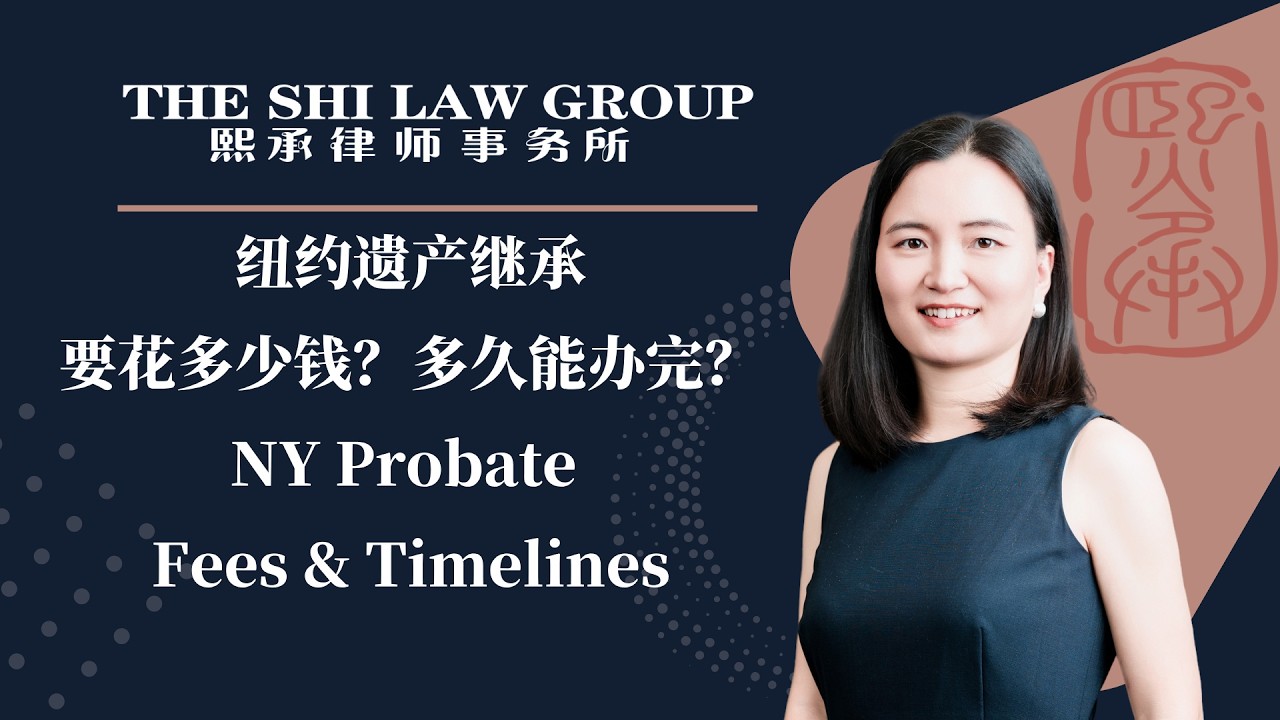
Navigating New York Surrogate’s Court: Fees, Timelines, and Expectations
What determines how fast you can settle a loved one's estate in NY? 📜 The Cost: Uniform Court Filing Fees One of the first questions clients ask is, "How much does the court charge?" In New York State, filing fees for probate or administration proceedings are standardized across all counties. Based on Estate Value: The fee is calculated based on the gross value of the estate assets. The Cap: For larger estates, the maximum court filing fee is generally capped around $1,250
Legal Assistant
Mar 273 min read

Protecting Family-Gifted Real Estate: How to Ensure Your "Wedding House" Remains Separate Property
A Legal Guide to Safeguarding Assets from Commingling and Intestacy Risks 📜 The Legal Reality of Family Gifts Purchasing a "wedding house" for a child is a generous tradition, intended to provide security for the next generation. However, a deed in one person's name does not offer absolute protection. Without strategic planning, what began as "Separate Property" can easily transform into "Marital Property" under the eyes of the law. ❌ Risk 1: Asset Commingling — The Dilution
Legal Assistant
Mar 243 min read


Legacy in the U.S.: Wealth or Burden? Understanding the 3 Major Hurdles of Estate Administration in NY & NJ
Will Your Estate Truly Reach the Next Generation? Amidst the hustle of building a life in the U.S., many assume that hard-earned assets will automatically pass to their children. However, under the legal frameworks of New York (NY) and New Jersey (NJ) , wealth transfer is anything but "automatic." Without a strategic plan, your estate could shrink by over 30% or become entangled in years of litigation before your heirs receive a single penny. To achieve a secure transition o
Legal Assistant
Mar 233 min read


Is Your Parent-Mandated Prenup Actually Enforceable?
When a Prenup Becomes "Parents' Homework"—Is It Still Legal? In the Chinese-American communities of NY and NJ , we often see a recurring scenario: With the wedding just around the corner, parents—driven by a desire to protect family businesses or real estate—hand a printed Prenuptial Agreement to the couple and say, "Sign this. It’s for your own good." While the intention is to safeguard wealth, these "parent-mandated" agreements are often riddled with legal "landmines." If
Legal Assistant
Mar 202 min read


The Cost of Love: A Simple Formula for Foreign Parents Buying U.S. Real Estate
The Price of Love—Calculating the "Succession Cost" of U.S. Property When Chinese parents purchase a home in New York or Long Island for their children, they often put only their own names on the deed. The intention is beautiful: "When we pass away, this house will naturally belong to our child." However, due to the sharp differences between U.S. and Chinese laws, this "natural" succession often carries a devastating price tag. 1. Why Does "Status" Determine the Value of Your
Legal Assistant
Mar 203 min read


How Often Do I Need to Update My Revocable Trust? 3 Major Life Events That Require a Legal "Tune-Up"
Your Revocable Trust is Signed—Now What? In the consultation room at The Shi Law Group , I am frequently asked a very practical question: “Attorney Shi, now that my Revocable Trust is finally done, do I need to keep coming back for updates? If my family grows or changes, am I going to be paying legal fees every year?” The answer might surprise you: If your trust document is drafted with enough flexibility, you really don't need to touch it that often. 1. A High-Quality Trust
Legal Assistant
Mar 183 min read


Wills 101: Can I Change It? What If I Lose It? (NY & NJ Guide)
Will FAQ: Changes, Erasures, and Missing Documents A Will is a living document—it should reflect your current life. However, how you handle, store, and edit that document in NY or NJ can determine whether the court accepts it or throws it out. 1. Can I Change My Will? Yes. You can update your Will as long as you have the mental capacity to do so. Codicils: For minor changes (like swapping an Executor), you can use a "Codicil." This is a legal supplement that must be signed
Legal Assistant
Mar 163 min read


Think There Are Only Two Types of Trusts? You’re Barely Scratching the Surface!
The Tip of the Iceberg: Why Your Trust is "Haute Couture," Not a Product In the world of wealth management, a trust isn't a one-size-fits-all binary choice. It is a highly sophisticated, customizable legal engine. There are countless ways to categorize and structure a trust— the "type" of trust you have simply depends on which legal lens you are looking through. To truly master asset protection, you must understand the primary dimensions used to define these legal structures:
Legal Assistant
Mar 92 min read


Does a Medicaid Trust Automatically Save on Capital Gains Tax? The Hidden Tax Trap
Medicaid Trusts: Why "On Paper" Isn't Enough for Tax Savings A Medicaid Asset Protection Trust (MAPT) is a powerful tool in New York and New Jersey for seniors to protect their homes while qualifying for long-term care benefits. However, a common misconception exists: that a Medicaid trust automatically eliminates Capital Gains Tax . 1. Medicaid Protection vs. Tax Optimization The primary goal of a MAPT is to divest assets so you meet the government's financial eligibility f
Legal Assistant
Mar 62 min read


Will vs. Trust: Which is the Best Shield for Your Assets in NY & NJ?
Will vs. Trust: Navigating Your Options in NY & NJ Many clients ask, "If I have a Will, why do I need a Trust?" The answer lies in how the legal systems of New York and New Jersey handle your passing. While a Will is a set of instructions for a judge, a Trust is a private mechanism that bypasses the courtroom entirely. 1. At a Glance: Key Differences Probate: A Will must be probated in court (Surrogate's Court). A Trust avoids probate , allowing for private distribution.
Legal Assistant
Mar 43 min read


Last Will & Testament: The Essential Safety Net for NY & NJ Families
Your Final Word: Why a Will is Non-Negotiable in NY & NJ Clients often ask, "If I'm getting a Living Trust, why do I still need a Will?" The truth is, in New York and New Jersey, a Will is not just a backup—it is a legal necessity . While a Trust manages your assets, a Will handles the human and administrative elements that a Trust simply cannot. 1. Naming Guardians: A Power Only a Will Holds This is the most critical function of a Will for parents. In NY and NJ, a Trust can
Legal Assistant
Mar 33 min read
给您的家庭和财富加一份保障!
熙承律师事务所全天候为纽约和新泽西的家庭和财富保驾护航,无论何时何地,请点击右方按钮预约免费咨询。
bottom of page